
Home care · HAI
Every visit planned, performed and recorded.
HAI links the care plan, the schedule, the professional's app and the coordination dashboard. The professional records the visit, coordination sees what happened, and a visit that did not happen becomes a pending item with an owner and a follow-up history.
A 30-minute conversation about your operation, with a demo on fictitious data. No commitment.
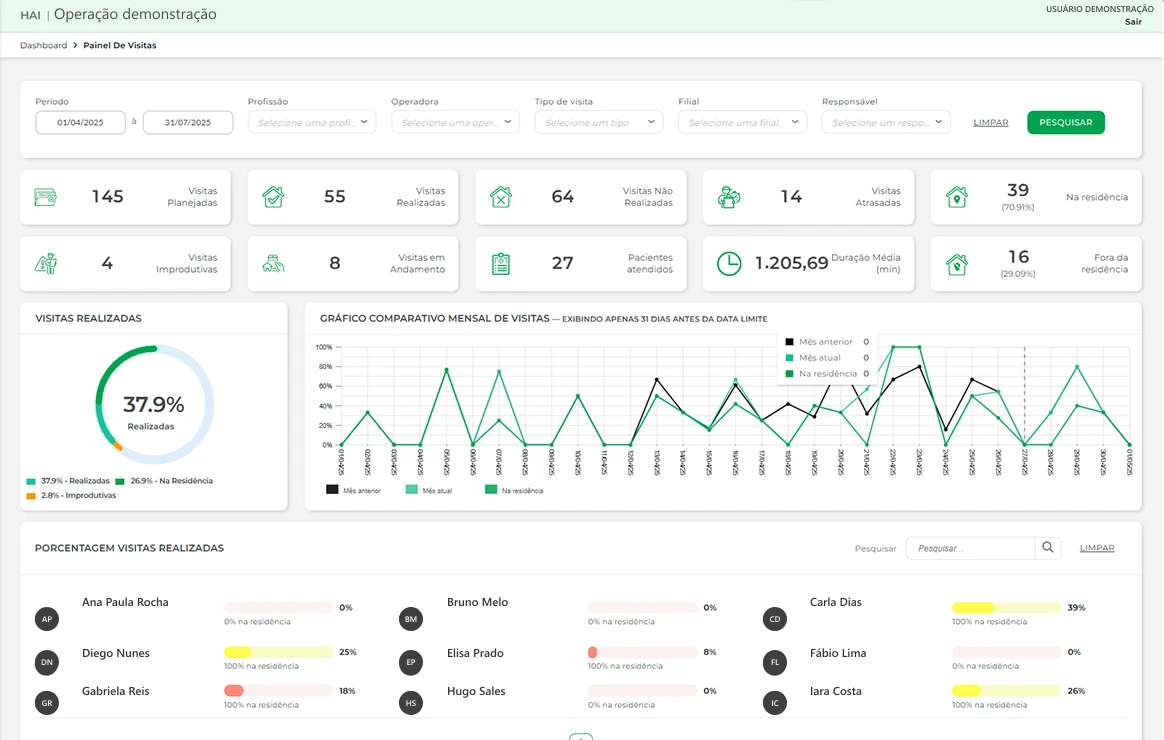
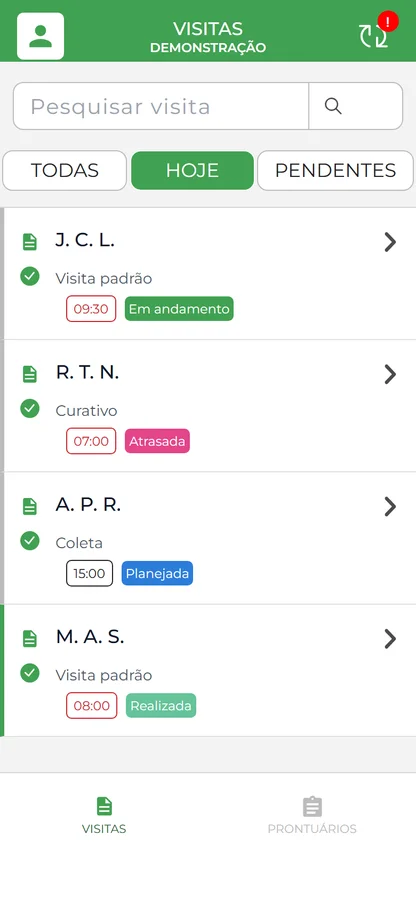
Demo with fictitious data.
The problem
When the operation runs on paper, spreadsheets and messages, what did not happen shows up late.
The effect in each operation depends on the design, the implementation and the validation done with the company.
The journey
Plan, perform, follow up and learn in the same workflow.
HAI connects the contracted workflows on a common platform: web platform, field app and management portal. What goes into each operation is defined at implementation, and modules, roles and integrations vary between organizations.
- Records the home care plan (PAD) and prescriptionVisit frequency and type in the same workflow.
- Sets the schedule and staffingA professional or partner assigned to each visit.
- Alert to the teamA missed visit becomes a pending itemWith an owner and follow-up history.
- ReportChecks and closes with audit
- Receives the day's schedule in the app
- Starts the visitLocation and photo depending on version and implementation.
- Records progress notes and guided checks
- ReportRecords the visitWho attended, where and at what time.
Field app
The professional records the visit, guided by the app.
The app shows the schedule and walks through filling in the visit, which helps reduce incomplete records. Evidence such as progress notes, checks and signature follows the configuration and rules in force in the operation.
- Day's schedule and visit details
- Guided check-in, progress notes and checks
- Record stored and synced, depending on version and implementation
- Location and photo, depending on version and implementation

Coverage and follow-ups
A visit that did not happen becomes a pending item with an owner.
HAI separates the breaks, which are planned visits that did not happen, and turns each one into a pending item with an owner. Coordination handles it with the professional or the partner. What appears, and how often, depends on the configuration and the implementation.
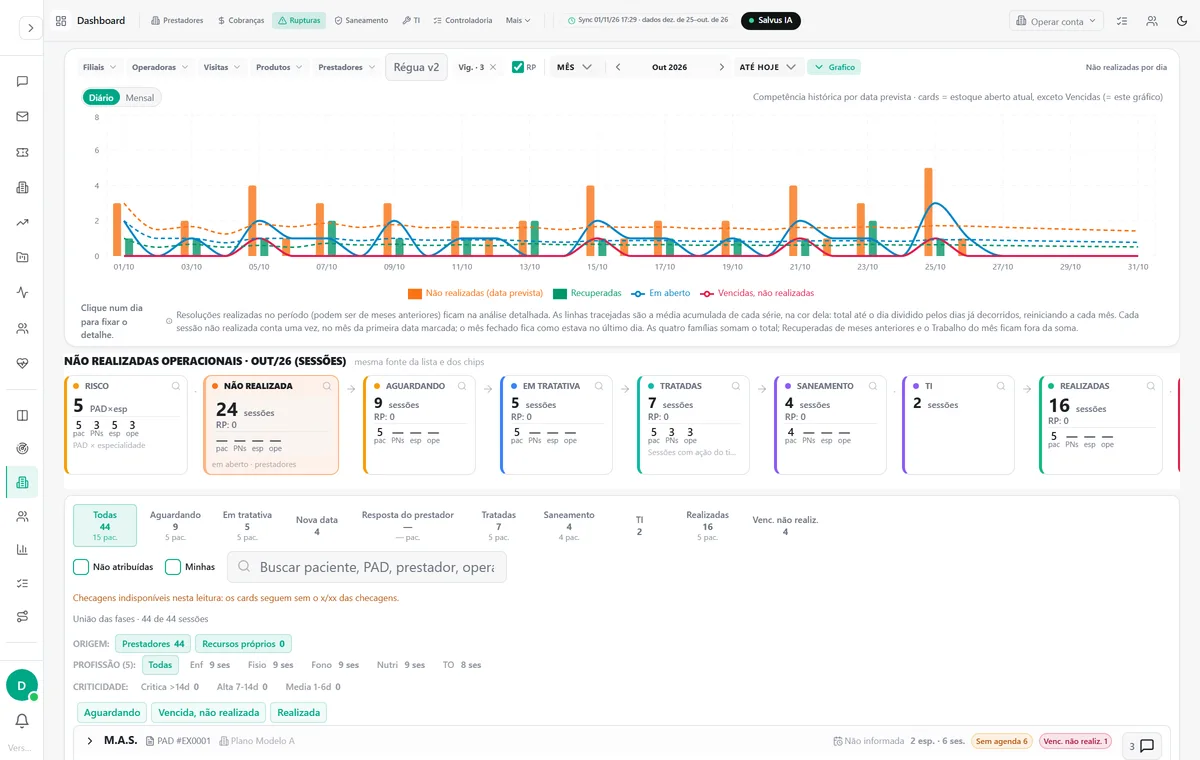
Demo with fictitious data.
Care command center
HAI
Command Center
Within HAI, it is the coordination center for home care operations. It brings together the view of visits and organizes how teams receive requests, anticipate deviations and follow the care.
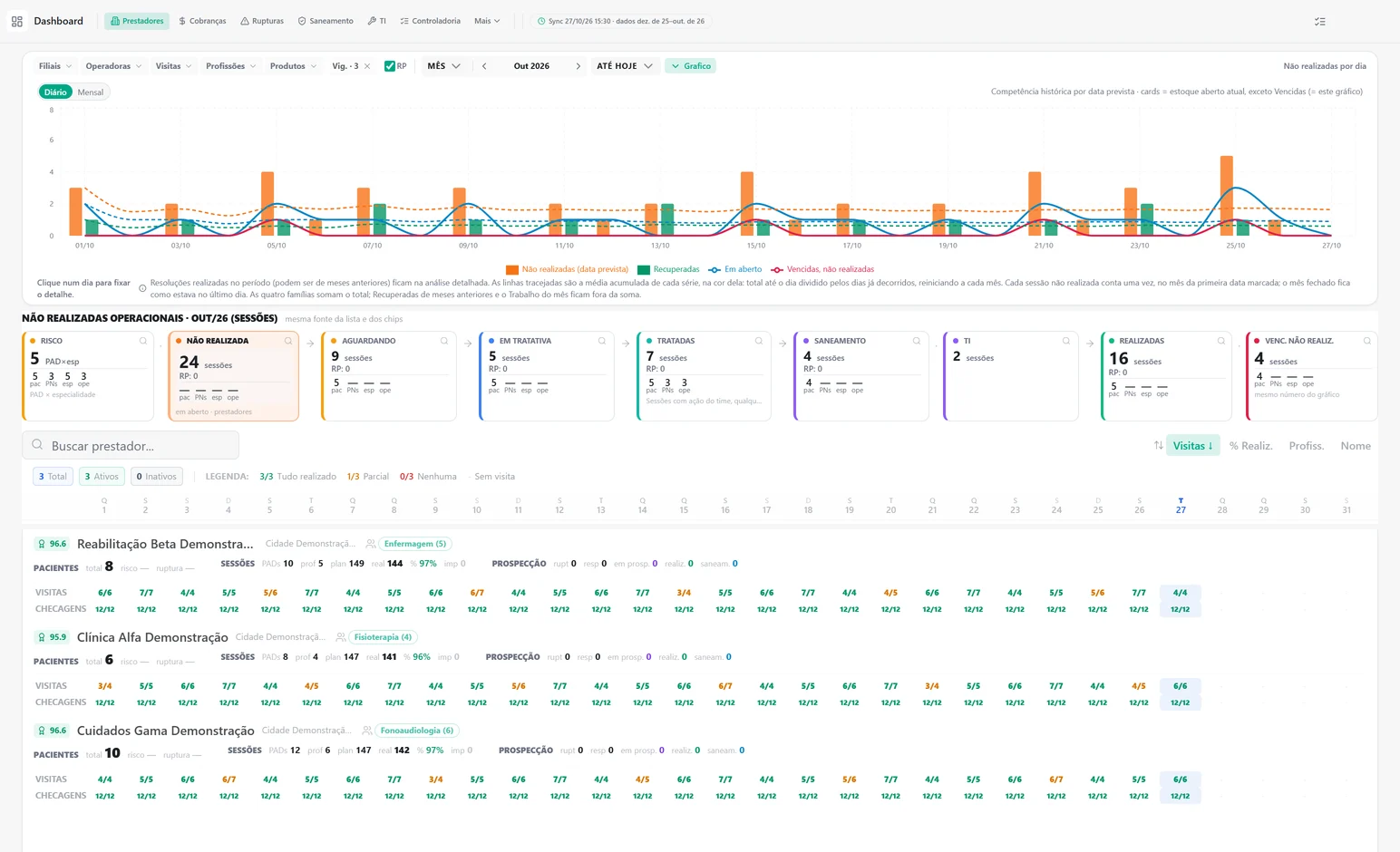
Demo with fictitious data.
- TrackWhat is planned, scheduled, under way or pending.
- CoordinateIdentifies who is responsible, records outcomes and follows referrals.
- CheckVerifies the result and supports the adjustments the care needs.
Internal teams and client teams. What appears in each operation follows its configuration and implementation.
What changes by area
Each area looks at the same record with its own question.
Coordination, operations, field, audit, leadership and technology look at the same operation, each with its own question. Open the one for your area.
Care coordination
Questions we ask: Who creates, approves, changes and closes the PAD? How does the prescribed frequency become a schedule?
What changes: PAD, prescription, schedule, execution and follow-up stay in the same workflow, and coordination sees what was planned and what happened.
Operations and coverage
Questions we ask: How are professionals and partners scheduled, guided and followed up? What happens when a visit is left uncovered?
What changes: HAI points out coverage, pending items and exceptions to those who run operations. Partners, professionals and follow-ups sit on the same dashboard, depending on the modules contracted.
Professionals in the field
Questions we ask: How does the professional receive the schedule and record the visit? What do they need to fill in?
What changes: The app presents the schedule and guides the visit record. Offline mode, location, photo and sync depend on the app version and the implementation.
Auditing and billing
Questions we ask: How does evidence become checking, closing and billing? What is left without proof?
What changes: Each visit leaves a traceable record, depending on the operation's profile and configuration. Closing relies on that record. It supports checking; it does not guarantee the absence of errors.
Executive leadership
Questions we ask: What baseline exists, and who follows the change? Which indicators go into the first wave?
What changes: We define with the operation which indicators to follow, what the starting point is and who validates the results before expanding.
Technology and security
Questions we ask: Which registries, systems, files and identifiers exist? Who accesses what?
What changes: Access is by role. Integrations connect the operation's sources while preserving origin and identity, and are defined in each implementation, after a survey and validation.
Audit and closing
Evidence is recorded at the visit and gathered for checking, with no paper chase.
How we start
Conversation, mapping and a demo by workflow.
We start by understanding how your operation works today. The demo follows the workflow that matters most to you and uses fictitious data.
Learning from the field. HAI evolves together with home care operations: technology and process have to go hand in hand, value appears when the data returns to coordination and decision-making, and adoption continues after go-live. For health plans and self-managed plans Learn about our story
Home care case · large operation
Time to implement care for a new patient
After: 33 h
Before:
8 daysAdmissions without prior assessment, approximately
After: 1%
Before:
45%Visits and prescriptions under digital management
After: 100%
Before:
0.15%Medication checks recorded in the app during a 60-day campaign
After: 38%
Before:
5%+33 percentage points
Source: large home care operation, records from the HAI platform and the client's management system, series from 2022 to 2026 (partial) and the August 2026 campaign. Before-and-after comparison, with no attribution of cause.
One operation's result is not a promise for another.
Frequently asked questions
What we are usually asked.
We already use another system.
We map what it covers and where the breaks are today. Then we assess whether HAI would replace, integrate with or complement each workflow. Each integration is assessed per operation.
Our operation is very particular.
We separate what is existing configuration, integration, process change and what would be new development. Modules, roles and integrations vary between organizations.
Our team will not use it.
Adoption is part of the project: key users, training, support, usage follow-up and change management. Implementation is gradual and requires active participation from your team.
We want everything integrated before we start.
We identify what is an entry requirement, what can come in phases and the risk of each dependency.
Does the system decide or prescribe?
No. The system alerts, according to a rule, source and owner defined at implementation. The clinical decision always belongs to the professional.
What result do you guarantee?
No result is guaranteed. We build the baseline and the follow-up criteria with your operation. One operation's result is not a promise for another.
How much does it cost and how long is the implementation?
It depends on the design of the operation. We cover it in conversation, after understanding your scenario. We do not publish prices or timelines on this page.
I am a professional or provider. Where do I ask for help?
Talk to the company that hired you. It knows your access, your schedule and your contract.
Hosting, data region and data protection officer follow each client's policy.
Tell us how your operation works today.
In 30 minutes we learn how you plan, perform and audit visits and show you HAI with fictitious data.
We reply within 1 business day.